
Trump Midterm Elections Conspiracies
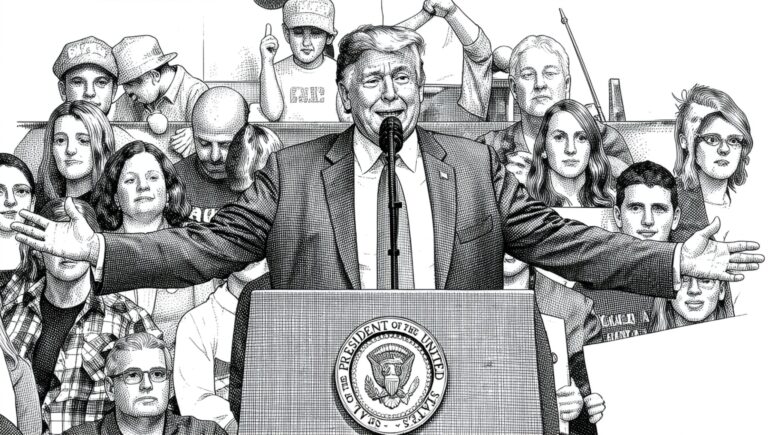
The 2026 U.S. midterm elections are primarily defined by the struggle for control of Congress, which will determine the legislative environment for the final two years of President Donald Trump’s second term.
The Core Rivalry
The central political rivalry in the 2026 midterms is a referendum on the Trump administration, with Democrats seeking to capture congressional majorities to serve as a check on presidential power, while Republicans fight to retain their current control.
- Congressional Control:
- The House of Representatives: Democrats have focused heavily on flipping the House. Historically, the president’s party faces significant headwinds in midterm cycles, and Republicans are working to defend a razor-thin majority against strong Democratic momentum.
- The Senate: The Senate battle is viewed as more competitive and challenging for Democrats. Republicans currently hold a 53–47 majority. While Democrats have opportunities in specific states, the map requires them to defend seats in politically difficult territory, making a net gain of four seats a “daunting challenge.”
- Ideological and Institutional Conflict: The elections have become a battleground over the future direction of the country. Democrats are campaigning on “threats to democracy” and the need for oversight, whereas the Republican platform emphasizes border security, crime, and economic policies.
Key Drivers of the Rivalry
Beyond the standard partisan competition, several specific issues are shaping the intensity of this cycle:
- The “Broken System” Narrative: Many voters express a deep, cross-partisan sense that the political system is not working. Both parties are attempting to capture this sentiment, though they frame the “broken” nature of the system differently—Democrats often link it to democratic erosion and institutional dysfunction, while populist conservatives often frame it through the “deep state” lens, targeting federal bureaucracy and government accountability.
- Economic and “Kitchen Table” Issues: Inflation, the cost of living, and energy prices remain the most consistent concerns for voters across the country. These issues are frequently used by both parties to attack the incumbent administration’s economic performance.
- Redistricting and Electoral Mechanics: The 2026 cycle has been marked by unusual, mid-decade redistricting efforts. President Trump encouraged Republican-led states to redraw maps to secure more seats, which triggered reactive measures from Democratic-led states (such as California’s “Election Rigging Response Act”). This has turned electoral mapping and voting rules into a major, high-stakes partisan battlefield.
- Foreign Policy: The ongoing conflict involving Iran has introduced volatility into the campaign. It has reoriented foreign policy discussions, with Republicans leveraging it to discuss national security and Democrats occasionally facing domestic fallout related to energy costs and international entanglements.
Conspiracies
The “Deep State” conspiracy theory is a political narrative positing that a clandestine, unelected network of government officials—primarily within intelligence agencies like the CIA and FBI—operates independently of, or in opposition to, elected leadership to advance its own agenda[1][2][3]. While the concept has historical roots and precursors dating back to the 1950s, it gained significant traction in American politics during the presidency of Donald Trump[1][4][5].
Historical and Conceptual Origins
The term “deep state” (derin devlet) originated in 1990s Turkey to describe a shadowy alliance between military, intelligence, and organized crime elements[1][2][3]. When the concept migrated to the U.S., it was reinterpreted to fit the American context[3].
- The “Dual State”: Earlier American iterations often referred to a “dual state”—a hidden national security hierarchy that supposedly monitored and controlled elected politicians, a theme echoed in warnings from figures like President Dwight Eisenhower[1][6].
- Mainstream Proliferation: The term became a potent political catchphrase during the Trump administration, frequently used to explain perceived bureaucratic resistance to the president’s policy agenda[5][7][8].
Role in Midterm Elections
In the context of midterm elections, “Deep State” narratives serve as a framework for interpreting election results and administrative processes[9][10].
- Undermining Institutional Trust: These narratives often transform routine administrative issues—such as voting delays, registration errors, or ballot processing—into evidence of deliberate, systemic fraud[9][11]. By framing these as the machinations of a “Deep State,” proponents can cast doubt on the legitimacy of electoral outcomes before, during, and after they occur[9][10][12].
- Mobilization and Framing: The narrative functions as a tool to create a “common enemy,” allowing political figures to position themselves as defenders of the “ordinary American” against a corrupt, hidden elite[13]. This has been observed in various election cycles, where the perception of a “Deep State” is used to rally voters, explain unexpected losses, and justify challenges to electoral integrity[10][12][14].
- Evolution of Tactics: The infrastructure for spreading these theories has matured over recent years[10]. Researchers have noted that false rumors often contain fragments of real issues, which are then “misleadingly framed” to fit the broader conspiracy narrative, making them harder to debunk[9][11].
Broader Societal Impact
The persistent focus on “Deep State” influence reflects a deeper, systemic decline in public trust in government, media, and technology institutions[10][15].
- Epistemological Crisis: Analysts argue that the debate over the “Deep State” is as much about how society defines truth and democracy as it is about the government itself[16]. When conspiracy theories align with pre-existing institutional mistrust, they can become widely held beliefs, often reaching a majority of voters in certain demographics[15].
- Political Consequences: The ongoing tension between executive power and the administrative state continues to fuel these narratives[17][18]. As political polarization persists, the “Deep State” remains a versatile, if empirically unsupported, tool for political contestation, shaping how different segments of the American electorate perceive the fundamental fairness and security of their elections[11][12][16].
The integration of “deep state” narratives into mainstream American political discourse represents a significant shift in how institutional legitimacy is challenged during election cycles. This phenomenon, which has evolved from fringe internet movements into a recurring framework for political mobilization, is characterized by several key trends.
The Mainstreaming of Fringe Narratives
While conspiracy theories regarding a “deep state”—a clandestine network of unelected officials allegedly sabotaging elected leaders—have historical roots dating back to the 1950s, their presence in modern politics has been transformed.
- Vocabulary Migration: Language once localized to communities like QAnon (e.g., “The Storm,” “The Cabal,” “Great Awakening”) has been filtered into mainstream political vernacular. While the most “hallmark” linguistic stylings of the early QAnon movement have largely faded, the underlying themes—such as the belief in a shadow government working to subvert the will of the people—have been adopted by broader political actors and media figures.
- A “Big Tent” Framework: The “deep state” has functioned as a versatile “big tent” conspiracy theory. It provides a flexible, simplified explanation for complex bureaucratic actions, allowing diverse groups to project their specific grievances—whether regarding technology, media, finance, or government administration—onto a single, malevolent, and “hidden” entity.
Institutional Alignment and Distrust
The surge in these theories is deeply linked to a broader, systemic collapse of public trust in democratic institutions.
- The Anti-Institutional Dimension: Researchers have observed that belief in conspiracy theories is often a function of an individual’s anti-institutional stance rather than their specific place on the left-right ideological spectrum. When government, media, or tech institutions are perceived as unreliable, “deep state” narratives gain traction because they align with this pre-existing skepticism.
- Strategic Use by Elites: Political figures frequently leverage these narratives to mobilize voters and preemptively delegitimize electoral processes. By framing administrative procedures—such as voter registration or mail-in ballot processing—as evidence of a “deep state” operation, they create a “common enemy” narrative. This effectively transforms routine democratic competition into an existential struggle between “the people” and a corrupt, hidden elite.
Federal Funding and Bureaucratic Sabotage
Recent political discourse has specifically centered on federal departments and their funding, framing them as key battlegrounds in the fight against the “deep state.”
- Funding as Evidence: Specialized government funding, or the administrative activities of departments like the Department of Homeland Security (DHS) and the Department of Justice (DOJ), are increasingly recontextualized as evidence of systemic interference. For instance, funding for election security or counter-disinformation efforts is often interpreted by critics as evidence of government-led manipulation.
- The “Deconstruction” Rhetoric: The effort to “deconstruct” the administrative state has become a primary campaign goal for many, framing the career civil service not as a standard feature of democratic governance, but as a hostile entity that must be dismantled.
Broader Societal Implications
The mainstreaming of these narratives has created a persistent “epistemological crisis,” where segments of the electorate operate from fundamentally different sets of facts.
- Erosion of Civic Culture: The widespread adoption of these narratives is associated with lower satisfaction with democracy and a decline in institutional trust. This environment can make it difficult for citizens to agree on the reality of election outcomes, as any process or result can be dismissed as a “deep state” fabrication.
- Dynamic Response: Recent reporting indicates that this rhetoric has become so entrenched that even political leaders who originally encouraged it now face pressure from their own base to take more radical actions to “expose” or “dismantle” the perceived shadow government, demonstrating the challenges of managing a movement driven by these persistent, often self-reinforcing, conspiratorial frameworks.
Sourceshelp
- wikipedia.org
- ebsco.com
- wikipedia.org
- wikipedia.org
- warontherocks.com
- wikipedia.org
- govexec.com
- govexec.com
- uw.edu
- uw.edu
- uw.edu
- nih.gov
- landsbokasafn.is
- gwu.edu
- changeresearch.com
- ijoc.org
- yale.edu
- yale.edu
About the Author



![The term "Epistemic Crisis" (derived from epistemology, the philosophical study of knowledge, truth, and how we know what we know)[1] refers to a systemic breakdown in society’s shared understanding of reality](https://thectdb.com/wp-content/uploads/2026/09/brainscan.jpg.webp)