
Javier Milei’s Cloned Dogs and Spiritual Beliefs
Javier Milei‘s political biography is marked by a rapid rise from economist to president, underpinned by an exceptionally strong, personal, and strategic alliance with Israel. His support for Israel goes beyond conventional diplomacy, blending political ideology, personal faith, and foreign policy.
Political Biography: From “Rockstar” Economist to President
Javier Milei, a professional economist born in Buenos Aires in 1970, had a career in finance and academia before gaining national fame as a fiery, anti-establishment media commentator. His libertarian and right-wing liberal ideas, focused on drastically reducing the state and fighting a “political caste,” resonated with a public disenchanted by economic crisis.
He was elected as a National Deputy in 2021 and won the presidency in 2023 with a radical platform that included dollarizing the economy and “dynamiting” the Central Bank. His key foreign policy pledge was to align Argentina closely with the United States and Israel.
The Israel Connection: A Multifaceted Alliance
President Milei’s ties to Israel are exceptionally deep, woven from personal conviction, political strategy, and concrete actions.
A Personal and Religious Bond
Milei’s connection to Judaism is personal. He has been studying the Torah, converted to Judaism, and made his first foreign trip as president-elect to the U.S. to visit the grave of an Orthodox Jewish rabbi. This bond is seen as a promise of extraordinary commitment to strengthening ties with Israel.
Unprecedented International Recognition
His support for Israel has earned unprecedented international honors for a non-Jewish head of state:
- The Genesis Prize: In 2025, he was awarded the “Jewish Nobel Prize,” becoming the first non-Jew and sitting president to receive it. He donated the $1 million prize to promote his vision of the “Isaac Accords” for stronger Israel-Latin America ties.
- Honorary Doctorate: In April 2026, Bar-Ilan University awarded him an honorary doctorate for his support of Israel and his fight against antisemitism.
Policy Actions: From Words to Deeds
Milei’s support has been translated into a series of decisive policy shifts:
- At the UN: He reversed decades of Argentine voting patterns to align more closely with Israel.
- Designating Terrorist Groups: His administration designated the Islamic Revolutionary Guard Corps (IRGC), Hamas, and Hezbollah as terrorist organizations.
- Reopening Investigations: He reopened investigations into the deadly 1990s terrorist attacks against Jewish and Israeli targets in Argentina.
- Combating Antisemitism: He has taken a firm stance against antisemitism, including supporting a legal complaint against a journalist for remarks that were deemed anti-Semitic.

Controversy and Criticism
This unwavering pro-Israel stance, particularly his frequent travels to the country, has drawn criticism from some domestic commentators who question why Argentina’s national interest appears to be so closely tied to a foreign power.
In summary, Javier Milei’s political biography is uniquely defined by his profound and active alliance with Israel. This is more than a typical political partnership; it is a central pillar of his ideology, identity, and presidency, earning him both significant international recognition and domestic scrutiny.
While Javier Milei, his cloned dogs, and Nazi history are separate topics, they represent some of the most prominent international headlines, cultural memes, and historical policy shifts of his presidency.
1. Javier Milei and His Cloned Dogs
One of the most widely reported personal details about Javier Milei is his relationship with his dogs, which has frequently been compared in pop culture to classic science fiction tropes.
- The Original Dog (Conan): In 2004, Milei adopted an English Mastiff named Conan, whom he frequently referred to as his “son” and credited with saving his life during a period of intense personal and financial hardship. Conan passed away in 2017.
- The Cloning Process: Following Conan’s death, Milei paid approximately $50,000 to the U.S. genetic preservation company ViaGen Pets to clone Conan. This resulted in five clones.
- The Names: Milei named the clones after prominent libertarian and free-market economists: Murray (after Murray Rothbard), Milton (after Milton Friedman), Robert, and Lucas (after Robert Lucas).
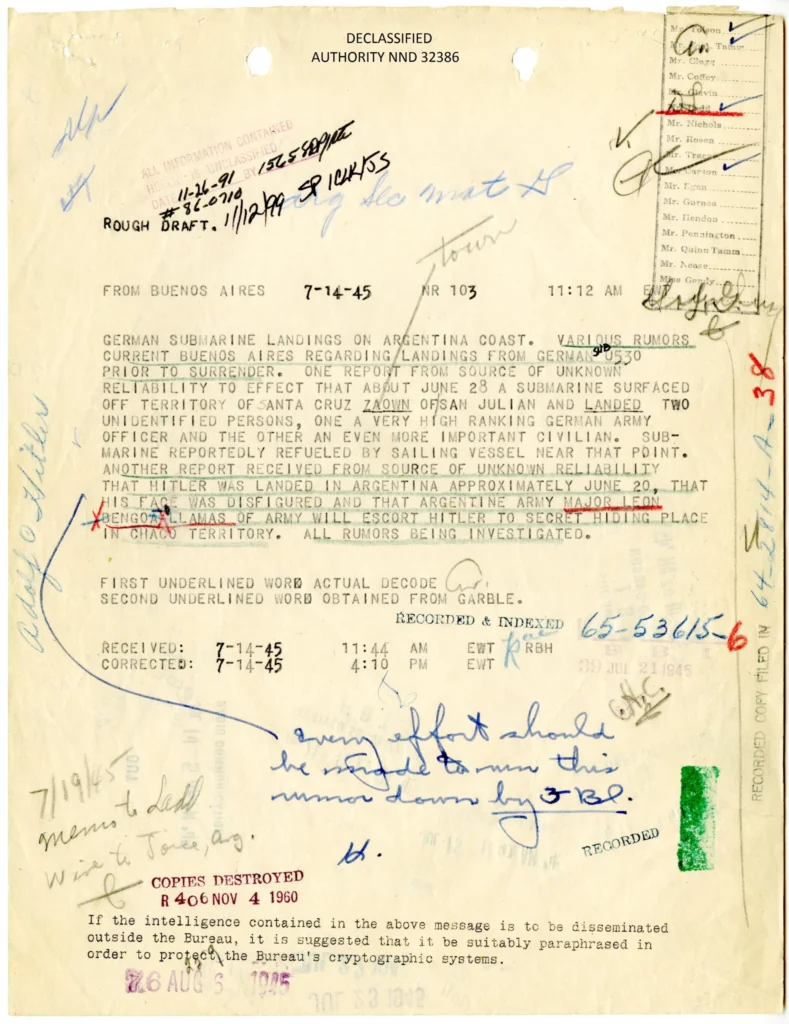
- Pop-Culture Comparisons: Because the cloning occurred in South America, internet commentators and media outlets frequently made tongue-in-cheek references to The Boys from Brazil—the famous 1976 sci-fi novel and film about a fictional plot to clone Adolf Hitler in South America.
2. Declassifying Argentina’s Nazi History (February 2025)
On a policy level, Milei has directly interacted with Nazi history by breaking with decades of state secrecy regarding Argentina’s past as a post-World War II haven for escaped Nazi war criminals.
- The Ratline Files: In February 2025, President Milei met with representatives of the Simon Wiesenthal Center at the Casa Rosada. During this meeting, he committed to fully declassifying Argentina’s secret government archives relating to post-WWII Nazi “ratlines”—the escape networks that allowed figures like Adolf Eichmann and the notorious Auschwitz doctor Josef Mengele to flee Europe and resettle in Argentina.
- International Cooperation: Milei handed over files and cooperated with a U.S. Senate Judiciary Committee investigation led by Senator Chuck Grassley. This investigation was looking into how financial institutions, such as Credit Suisse, historically serviced Nazi-linked accounts.
- A Shift from the Perón Era: Historians argue that this move represented a major departure from the historical stance of previous Argentinian administrations. Most notably, the mid-20th-century government of Juan Perón had actively facilitated the entry of war criminals into the country. The Simon Wiesenthal Center praised Milei for acting with “lightning speed” to open files that previous leaders had kept restricted.
3. Political Accusations of “Nazi Sympathies”
During his rapid political rise, Milei was occasionally accused by domestic political opponents and left-wing critics of harboring far-right or fascist tendencies, which he strongly and consistently rejected.
Connection to Judaism: According to biographers, the sting of being called a Nazi sympathizer in 2021 was a primary catalyst for Milei’s deep immersion into Jewish theology. To demonstrate he bore no animus toward Jewish people, he began intensively studying the Torah. He has since become an outspoken philosemite, frequently aligned his foreign policy closely with Israel, and publicly expressed a desire to convert to Judaism.
Since Javier Milei took office as President of Argentina in December 2023, his administration’s radical “shock therapy” economic reforms and libertarian policy agenda have triggered a continuous wave of political opposition, legal challenges, and street protests.
The Accusations: Critics pointed to his aggressive debate style, his use of black leather trench coats, and statements where he claimed his movement was “morally and aesthetically superior” to the left, which some commentators compared to theories of racial superiority.
Milei’s Response: Milei fiercely rejected these comparisons, filing lawsuits against journalists who associated him with Nazism. He argued that as an “anarcho-capitalist,” his philosophy—which champions absolute individual liberty and a dismantled state—is the exact ideological opposite of the totalitarian, state-controlled corporatism of Nazi Germany.
To understand the resistance to Milei’s government, it is necessary to examine the diverse coalition of actors, their specific lobbying interests, and the timeline of major mobilizations from 2024 through August 2026.
1. Who is Behind the Opposition? (Key Actors and Lobbies)
Unlike previous administrations, Javier Milei’s party, La Libertad Avanza (LLA), has historically held very weak territorial power, with no provincial governorships and a small minority in both chambers of Congress. Consequently, opposition forces have used their institutional, union, and street mobilization power to challenge his agenda.
A. Labor Unions (The Syndicates)
The labor movement is the most organized and powerful driver of protests in Argentina, with deep institutional roots dating back to the Peronist era of the mid-20th century.
- The Players: The CGT (Confederación General del Trabajo—the largest trade union federation) and the two branches of the CTA (Central de Trabajadores de la Argentina).
- Their Interests and Lobbies:
- Union Funding: Labor leaders vigorously opposed Milei’s attempts to abolish mandatory union contributions deducted directly from workers’ salaries—a move that threatened the financial survival of the unions themselves.
- Labor Protections: The unions lobby to protect collective bargaining, prevent the extension of the legal workday (from 8 to 12 hours), preserve severance pay structures, and protect the right to strike, which Milei’s reforms have targeted.
B. Mainstream Political Opposition (Peronists and Left-Wing Parties)
- The Players: Unión por la Patria (the Peronist/Kirchnerist coalition) and left-wing coalitions such as FIT-U (Frente de Izquierda y de Trabajadores—Unidad).
- Their Interests:
- State Control of Resources: They lobby against the privatization of key state enterprises (such as the national airline, Aerolíneas Argentinas, and energy giant YPF).
- Welfare and Spending: This political block seeks to preserve Argentina’s historically robust welfare state, objecting to the heavy spending cuts Milei implemented to achieve a fiscal surplus.
C. Social Movements and Informal Workers
- The Players: Groupings like UTEP (Unión de Trabajadores de la Economía Popular) and Polo Obrero represent informal workers, unemployed citizens, and neighborhood organizations.
- Their Interests: These groups are highly dependent on state social assistance. They lobby against food budget cuts to community soup kitchens (comedores populares), utility price hikes (following the removal of state subsidies), and the reduction of welfare programs.
D. The University and Education Sector
- The Players: National public university administrations, student federations, and professors’ unions.
- Their Interests: Argentina’s tuition-free university system has historically been a proud point of social mobility. The sector has protested continuously against the government freezing or cutting higher education budgets amid soaring inflation.
E. Provincial Governors
- The Players: A mix of Peronist, moderate opposition, and even allied governors (such as the governors of resource-rich Patagonian provinces or Córdoba).
- Their Interests:
- Federal Funding: They lobby against Milei’s severe cuts to federal tax-sharing funds (coparticipación) and discretionary transfers to the provinces.
- Resource Sovereignty: Governors of oil, gas, and mining provinces have resisted federal attempts to centralize resource management or ease restrictions on foreign land ownership in resource-sensitive border and hydrological zones.
F. Indigenous and Environmental Groups
- The Players: Local communities (such as Mapuche organizations) and environmental NGOs.
- Their Interests: Preventing the deregulated exploitation of lithium, water, and agricultural land, and lobbying against property laws that ease evictions or weaken land protection rules.
2. Timeline of Key Protests and Milestones (2024–2026)
January – June 2024: The Battle Over the “Omnibus Law”
Immediately upon taking office, Milei issued a massive Decree of Necessity and Urgency (DNU) and sent a sweeping “Omnibus Law” to Congress to deregulate the economy.
- January 2024: Just seven weeks into Milei’s term, the CGT organized a massive, nationwide 12-hour general strike that brought tens of thousands to the streets and grounded flights.
- February 2024: Following weeks of protests, Milei was forced to withdraw the initial Omnibus Law after Congress rejected key articles. Concurrently, Ignacio Torres, the governor of the oil-producing province of Chubut, threatened to cut off energy supplies to the rest of the country in a dispute over withheld federal funds.
- June 2024: A heavily watered-down version of the reforms finally passed the Senate (37–36) amid violent street protests outside Congress, where police used tear gas and water cannons against demonstrators.
Late 2025 – Early 2026: The Labor Modernization Law Clash
Following gains in the late 2025 midterm elections, the Milei administration renewed its push to overhaul Argentina’s decades-old labor laws.
- February 19, 2026: The CGT called another major general strike to protest the “Labor Modernization Bill” as it was debated in the Chamber of Deputies.
- February 27, 2026: Congress officially passed the labor overhaul, which allowed for 12-hour workdays, reduced employer social security contributions, weakened trade unions’ bargaining power, and reduced severance pay.
- March 30, 2026: The opposition found success in the courts. Following a petition by the CGT, Argentina’s National Labor Justice system ruled to temporarily suspend approximately 40% of the newly enacted labor law’s articles on grounds of potential unconstitutionality.
May 2026: Mass University Budget Protests
- In May 2026, tens of thousands of students, lecturers, and citizens marched through Buenos Aires and other major cities. It marked the fourth massive protest over education funding since Milei took office, demanding the government implement a university financing law approved by Congress. The government refused, citing its commitment to a strict zero-deficit fiscal policy.
August 2026: The Private Property Reform Riots
- In early August 2026, severe clashes erupted outside the National Congress in Buenos Aires. Protesters mobilized by left-wing movements and unions gathered to protest the “Inviolability of Private Property” bill, which sought to streamline eviction procedures and modify land-use rules.
- The Foreign Land Controversy: The bill originally contained a highly controversial clause to raise the legal limit on foreign land ownership from 15% to 25%. Due to fierce pushback from provincial governors and public protests denouncing the “colonization” of Argentine territory, the government was forced to withdraw the foreign land clause to secure the bill’s advancement.
3. Summary of Arguments
- The Government’s Perspective: President Milei and his supporters argue that these protests are orchestrated by “the caste”—corrupt political and union elites who are fighting to maintain their historical privileges at the expense of the public. They assert that deregulation, labor modernization, and spending cuts are necessary to curb chronic inflation, formalize the massive informal job market, and attract vital foreign investment.
- The Opposition’s Perspective: Opponents argue that Milei’s austerity policies have drastically increased poverty, destroyed the local industrial fabric, and eroded fundamental workers’ and human rights. They view property and land reforms as attempts to sell off Argentina’s natural resources (such as minerals and water) to foreign interests, compromising national sovereignty.
Based on the search results, President Javier Milei’s recent confrontations, particularly with Brazil, appear to be driven more by domestic economic strategy and ideological alignment than by antisemitism. There is no evidence in the provided information linking his actions to anti-Jewish sentiment.
The Economic and Political Context
Milei’s aggressive rhetoric, such as calling Brazilian President Lula a “thief” and “corrupt” , is seen by analysts as a distraction from the domestic fallout of his radical economic reforms, often described as “shock therapy” . Internationally, his alignment with far-right figures like former President Jair Bolsonaro and Donald Trump is viewed as an attempt to build a transnational conservative coalition that pressures left-wing governments in the region .
The Resulting Diplomatic Crisis
This strategy has had severe diplomatic consequences. Brazil downgraded its relations with Argentina after Milei publicly campaigned for a right-wing Brazilian presidential candidate, which Brazil officially labeled as “interference in Brazil’s internal affairs” . Political analysts note that the core of the conflict is Milei’s profound ideological and personal hostility towards Lula, rather than traditional bilateral economic disagreements .
In summary, the protests and diplomatic crisis surrounding Milei are fundamentally rooted in a volatile mix of economic desperation at home and a far-right ideological battle abroad, with no evidence pointing to antisemitism as a factor in these particular events.
About the Author


![The term "Epistemic Crisis" (derived from epistemology, the philosophical study of knowledge, truth, and how we know what we know)[1] refers to a systemic breakdown in society’s shared understanding of reality](https://thectdb.com/wp-content/uploads/2026/09/brainscan.jpg.webp)
