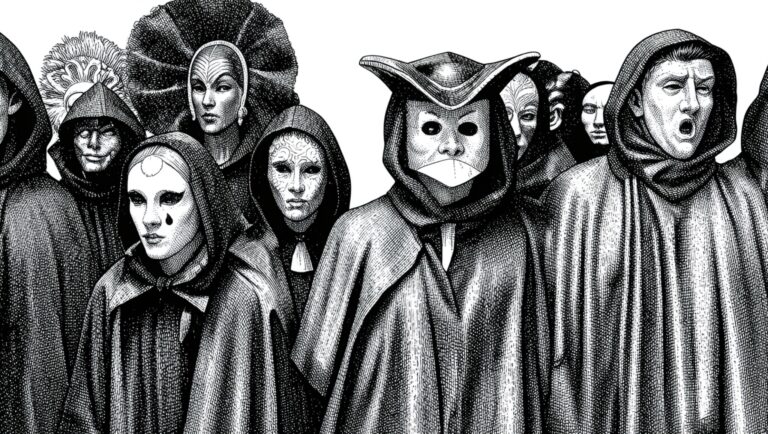
![The term "Epistemic Crisis" (derived from epistemology, the philosophical study of knowledge, truth, and how we know what we know)[1] refers to a systemic breakdown in society’s shared understanding of reality](https://thectdb.com/wp-content/uploads/2026/09/brainscan.jpg.webp)
Epistemic Crisis – The end of baseline truth

The term “Epistemic Crisis” (derived from epistemology, the philosophical study of knowledge, truth, and how we know what we know)[1] refers to a systemic breakdown in society’s shared understanding of reality[2].
In a functioning society, there is broad agreement on the rules of evidence—how facts are verified, who counts as a trusted authority (scientists, mainstream journalists, courts, historians), and what constitutes objective truth[2]. During an epistemic crisis, those shared rules dissolve[1].
When applied to phenomena like the persistence of 9/11 conspiracy theories or claims that all pandemics are lab-made, the epistemic crisis manifests in several profound ways:
1. The Collapse of “Epistemic Authority”
For generations, traditional gatekeepers—major news networks, academic institutions, government agencies (like the CDC or intelligence communities), and peer-reviewed journals—held a monopoly on what was accepted as baseline truth[3].
- The Crisis: That authority has largely cratered[2]. High-profile institutional failures (such as the false intelligence regarding Weapons of Mass Destruction used to justify the Iraq War, shifting narratives during COVID-19, or economic crashes) taught the public that official channels often lie, spin, or make catastrophic mistakes.
- The Result: Once the gatekeepers lose credibility, all institutional claims are treated with equal suspicion. If the government can be wrong about why a war started, people become primed to believe it could be lying about how a pandemic started or how a skyscraper fell.
2. The Rise of “Epistemic Autonomy” and DIY Truth
When people lose trust in traditional epistemic authorities, they don’t simply stop believing things—they seek alternative ways to construct reality[4].
- The Mechanics: Social media algorithms reward contrarianism[4]. Platforms like TikTok, X, and YouTube allow anyone to bypass institutional gatekeepers and present themselves as an “investigative researcher.”
- The Result: This gives rise to radical epistemic autonomy[4], where individuals feel empowered to “do their own research” by curating a reality that fits their intuition, political worldview, or emotional needs. Conspiratorial narratives thrive here because they offer a neat, simple, and emotionally satisfying alternative to complex, chaotic reality[5].
3. Truth Decay and the “Post-Truth” Ecosystem
The RAND Corporation and various sociologists describe this as “truth decay”—a phenomenon characterized by a heavy blurring of the lines between opinion, fact, and fabrication[2].
- In an epistemic crisis, facts are no longer evaluated on their empirical merits or peer-reviewed consensus; instead, they are tribalized[1]. “If my political “tribe” or preferred influencer says it happened, it’s true; if the established institutions say it happened, it’s a cover-up.”
I. The Term as a Symptom
The phrase “epistemic crisis” is seductive because it sounds diagnostic. It implies a neutral clinical gaze: we, the observers, have correctly identified that they, the society, are suffering a breakdown in the machinery of knowing. But the very act of naming a crisis is already an epistemic move. It presupposes a standpoint from which the crisis is visible—a vantage point outside the dissolution, a surviving island of shared reality from which one can look upon the wreckage and say, “There, that is a crisis.”
This is the first deconstructive lever: the term “epistemic crisis” is never merely descriptive; it is performative. To declare an epistemic crisis is to claim epistemic authority. It is to say: I know what counts as knowing, and I know that you no longer do. The diagnostician of the crisis thereby exempts themselves from it. This is not necessarily hypocrisy—it may be unavoidable—but it is a structural feature of the discourse that must be acknowledged before any analysis can proceed.
II. The Assumed Baseline: A “Functioning Society”
Your framing posits a prior state: “In a functioning society, there is broad agreement on the rules of evidence.” This is the golden-age premise, and it deserves scrutiny.
Was there ever such a society? The history of knowledge is not a story of consensus but of violent contestation. Galileo’s conflict with the Church was not a failure of shared epistemic rules; it was a collision between two incompatible rule-sets, each with its own authorities, evidences, and truths. The Salem witch trials were not an epistemic crisis—they were a functioning epistemic regime, one that produced truth through testimony, spectral evidence, and communal fear. The question is not whether a society has shared rules, but whose rules, enforced by whom, at whose expense.
The “functioning society” of the mid-20th century, which your framing implicitly invokes—with its trusted scientists, mainstream journalists, courts, and historians—was not a natural order. It was a historically specific configuration: the postwar settlement of professionalized expertise, mass media oligopoly, and state-sponsored research. It was functional for some, and it excluded, silenced, or pathologized others. The epistemic crisis, then, may not be a fall from grace but a renegotiation of a settlement that was always unequal.
III. The Collapse of “Epistemic Authority” as a Redistribution of Trust
You list the collapse of epistemic authority as the first manifestation of the crisis. But what is “authority” here? Authority is not the same as expertise. Authority is the social recognition that expertise should be deferred to. It is a gift, not a possession. The scientist does not command authority by virtue of being right; authority is conferred by a public that trusts the institution of science.
When that trust collapses, the deconstructive question is not “Why do people no longer trust scientists?” but rather “What did the institutions of knowledge do to earn or lose that trust?” The answer is not merely a story of irrational conspiracy theorists. It is also a story of:
- Institutional failures: Tuskegee, thalidomide, the replication crisis in psychology, the opioid epidemic, the Iraq War’s fabricated evidence, the financial crisis of 2008 and the economists who did not see it coming.
- The weaponization of doubt: The tobacco industry’s “Doubt is our product” memo, the fossil fuel industry’s climate denial machinery, the pharmaceutical industry’s manipulation of trial data.
- The commercialization of truth: The transformation of universities into patent factories, the collapse of local journalism, the rise of clickbait and engagement metrics as the currency of information.
The collapse of epistemic authority is not a unilateral act of public irrationality. It is a relational breakdown, co-produced by institutions that claimed authority without accountability and publics that withdrew trust as a rational response to betrayal. The conspiracy theorist is not always wrong to suspect that the official story is incomplete. The crisis is that there is no longer a shared procedure for adjudicating which suspicions are warranted and which are paranoid.
IV. The Conspiracy Theory as Epistemic Practice
Your framing treats 9/11 conspiracy theories and “all pandemics are lab-made” claims as symptoms of the crisis. But from a deconstructive standpoint, they are also epistemic practices—ways of knowing that have their own internal logic, their own rules of evidence, their own authorities.
The conspiracy theorist is not anti-knowledge. They are often hyper-engaged with knowledge, reading primary documents, cross-referencing timelines, demanding transparency. Their sin, from the standpoint of the mainstream, is not that they reject evidence but that they reject the gatekeepers of evidence. They have substituted one epistemic authority (the CDC, the WHO, the New York Times) for another (alternative media, whistleblowers, “doing your own research”).
This substitution is not necessarily irrational. It is a response to a world in which official knowledge has been wrong, lied, or changed its mind—often under pressure, often too late. The deconstructive point is not to defend conspiracy theories but to refuse the easy binary of rational public vs. irrational fringe. The crisis is not that people believe wrong things; it is that the procedures for correcting wrong beliefs have lost their legitimacy.
V. The Question of Truth
The deepest deconstructive move is to ask: What is “objective truth” in this framing, and who gets to define it?
Your framing posits objective truth as a thing that exists and that a functioning society agrees on. But truth is not a static object; it is a social achievement, produced through institutions, practices, and power relations. The truth of climate change is not merely a fact waiting to be discovered; it is a fact that had to be constructed through decades of scientific labor, political struggle, and institutional consolidation. Its “objectivity” is real, but it is not given; it is made.
When the epistemic crisis is described as a loss of shared reality, the implicit anxiety is often less about truth itself and more about the loss of a shared world in which truth claims can be adjudicated. The crisis is not that we disagree about facts; it is that we no longer share a procedure for resolving disagreements. And that procedure—Habermas’s ideal speech situation, the scientific method, the adversarial press—was always more ideal than real.
VI. The Function of the Term
Finally, we must ask: What work does the term “epistemic crisis” do in the world?
It is not a neutral description. It is a boundary object that allows certain actors to pathologize others. To declare an epistemic crisis is to position oneself as the defender of reason against unreason, of truth against falsehood, of civilization against barbarism. It is a way of saying: The problem is not that our institutions have failed you; the problem is that you have failed to believe them.
This is not to say the term is useless. It names something real: the fragmentation of public discourse, the rise of filter bubbles, the erosion of trust in expertise. But it names it from a particular vantage point, and that vantage point is not innocent. The deconstruction of “epistemic crisis” does not dissolve the phenomenon; it reveals the politics of naming it.
VII. Toward a Post-Crisis Epistemology
If the old settlement of epistemic authority is dead, what comes next? A deconstructive analysis cannot prescribe, but it can clear the ground. It suggests that the way forward is not to restore the old authorities—they are not coming back, and their restoration would only reproduce the conditions of the crisis. Instead, the task is to build new epistemic practices that are:
- Plural: acknowledging multiple ways of knowing, not all reducible to the scientific method.
- Accountable: institutions that earn trust through transparency, humility, and responsiveness, not through decree.
- Participatory: knowledge production that involves affected communities, not just experts.
- Resilient: capable of surviving disagreement, uncertainty, and the inevitable failures of knowledge.
This is not a utopian project. It is already happening, in fragmented and uneven ways: in citizen science, in open-source intelligence, in community-based research, in the slow, painful work of rebuilding trust after betrayal. The epistemic crisis is not the end of knowledge. It is the beginning of a different relationship to it.
Coda: The Magistrate’s Verdict
The term “epistemic crisis” is a diagnostic weapon. It names a real fragmentation but does so from a position that claims neutrality while smuggling in a normative preference for the old order. To deconstruct it is not to deny that something is broken. It is to insist that the breaking is not merely a failure of public reason but a crisis of legitimacy—a reckoning with the fact that the authorities of knowledge were never as neutral, as transparent, or as trustworthy as they claimed.
The magistrate’s verdict, then, is this: The epistemic crisis is real, but it is not a disease of the public mind. It is a crisis of the institutions that once claimed to know. The question is not how to make people believe again. The question is how to build knowledge practices that deserve belief.
Why the Epistemic Crisis Matters
The danger of an epistemic crisis goes far beyond bizarre internet theories. When a society loses a shared foundation of facts, democratic governance becomes nearly impossible[1]. Democracy relies on compromise, and compromise relies on a shared baseline reality[6]. If one group believes a pandemic is a natural tragedy and another believes it is a deliberate bioweapon—or if one group believes an election was legitimate while another believes it was stolen—political debate ceases to be a disagreement over policy and devolves into an existential war over reality itself.
Sourceshelp